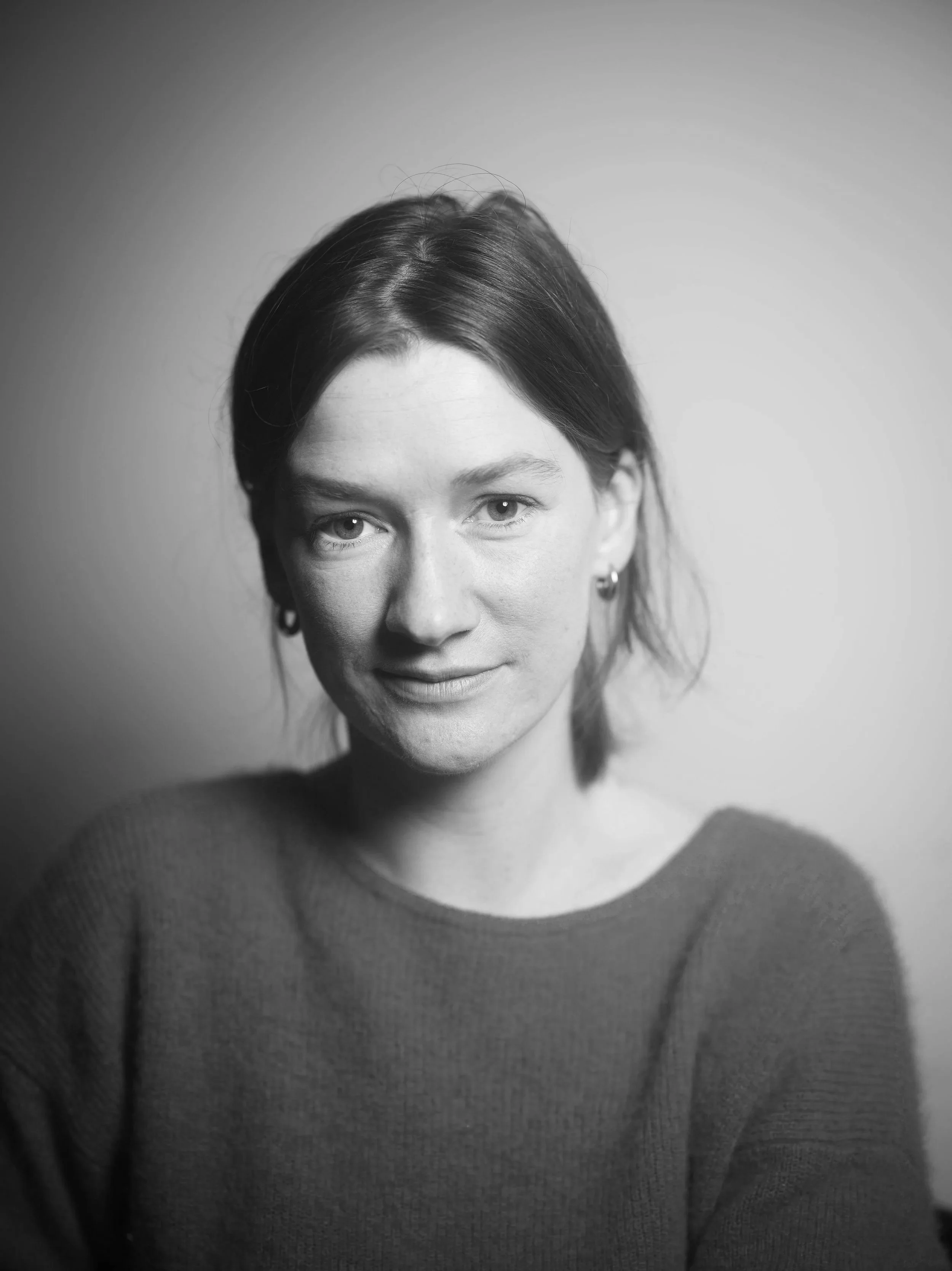
Every Wednesday for ten years, WaySeeing Ethics Founder, Madelaine Ley, mentored in the art of agenda-free presence. Then, she ended up as a philosopher in a robotics lab.
There, at Delft University of Technology, she continued the deep attentiveness taught to her by her mentor. Observing her engineering colleagues, she learned about the challenges of getting robots to work. Working alongside industry partners, she came to understand the pressures of business. With her fellow ethicists, she experimented with ethics teaching and design.
The most interesting insights, however, emerged when people came with quiet confessions and dreams: I’m worried I’m contributing to more disconnection. I’m afraid that my research will be used by the military. I wonder if we could make this more beautiful? What if we inspired wonder?
Within the urgent and productive field of AI and robot ethics, Madelaine gets back to the intimacy of these conversations,
offering something simpler and perhaps more radical: slowing down to meet the buzz around AI and robots with critical minds and a spirit of curiosity. It’s in this spaciousness, that Madelaine encourages students, industry partners, and governments to discern the multitude of options vying for our attention, if we’d only dare to meet them.
Sensing possibility requires more than our clever minds.
So, Madelaine balances academic rigour with experiential learning to cultivate a sense of spaciousness. WaySeeing Ethics services— be it a one-on-one, a keynote, short course, audit, or research report— will always incorporate something to stir you: an imaginative exercise, poetry, storytelling, or an ecological meditation.
Madelaine has brought her multi-faceted and creative approach to technology ethics to university courses on responsible AI, robot-ethics, design ethics, engineering ethics, and digital citizenship. She was named “100 Brilliant Women in AI Ethics” list by Lighthouse3, and has been featured by the BBC, NRC, Filosofie Magazine, Yes! Magazine, and Life Itself, as well as funded by The European Pavilion, Horizon 2020 and the Social Science Research Council of Canada. She’s currently gathering her ideas on technology into a book, I Can’t Believe I’m Writing About AI: Reflections on Modern Technology from a Mother-Philosopher, and is launching a podcast in April 2026 called, STIRRINGS, where she interviews global thought leaders, poets, and artists who are devoted to possibility.